The Ultimate Guide To Micro-Donation Funnels
03/04/26
Lugh Studio
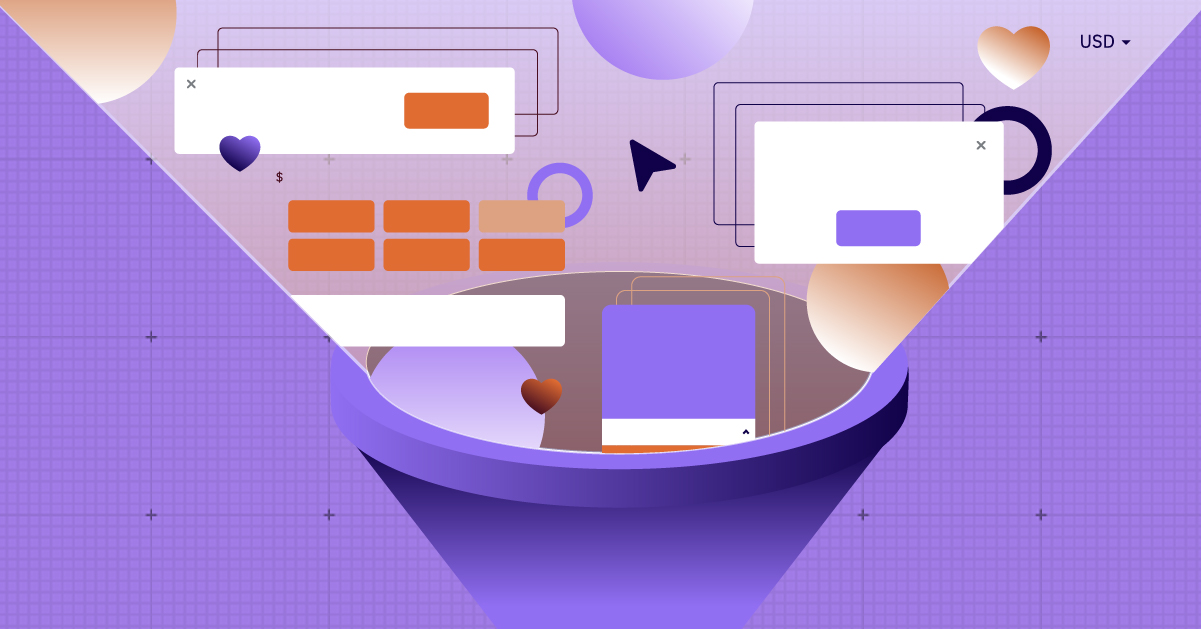
Micro-donation funnels are one of the quickest ways for nonprofits to acquire more donors. Because they generally focus on smaller overall donations, they don’t require a huge leap of trust. Built well, these funnels reduce hesitation. This can lead to higher conversion rates overall.
In this guide we are giving you everything you need to know about building micro-donation funnels at your nonprofit. This includes the psychological principles behind micro-donation funnels, why they can be effective, and how to create them.
Let’s get started.
- What Is A Micro-Donation Funnel?
- The Psychology Of Micro-Donation Funnels
- When Micro-Donations Beat Bigger Campaigns
- The 5 Stages Every Micro-Donation Funnel Needs
- 7 Tips For Effective Micro-Donation Funnels
- The Metrics That Matter
- Tools And Resources
- Conclusion
CLICK HERE FOR THE PDF VERSION OF THIS GUIDE
What Is A Micro-Donation Funnel?
A micro-donation funnel is the journey a person goes through when choosing to donate. This involves several steps, which we cover later on in the guide.
Usually, the donation you as a nonprofit are aiming for is a bit smaller. Something around $10. The main goal with this kind of funnel isn’t a ton of donations. Rather, it’s efficiently acquiring more donors and creating the conditions necessary for them to donate again in the future.
As for why micro-donation funnels are important? We recently covered this in our article about the importance of micro-donation funnels. But here are a few important effects that these smaller funnels have:
- Reduce hesitation. Somebody hesitating is one of the worst things that can happen when they are about to donate. But a $3 donation? It’s psychologically easier than a $30 decision.
- Create immediate momentum. People like completing meaningful actions. And when they do that (which a micro-donation funnel allows for) that can lead to more “decisions” (donations) down the line.
- Widen the top of the funnel. All things equal, you want more donors. And when you implement the power of a micro-donation funnel, more donors is exactly what you get.
- Give you permission to follow up. Micro-donation funnels are not just about the money you generate up-front. They are about bringing people into your audience, communicating with them over time, and generating more donations down the line.
Most organizations and creators focus heavily on larger donations. These matter. But micro-donation funnels solve a different problem: how do you convert people that want to give, but aren’t yet willing to donate hundreds of dollars?
The Psychology Of Micro-Donation Funnels
To create micro-donation funnels at your nonprofit, it helps to understand the psychology that makes them effective. Why they work, what makes them compelling – and the psychology at work.
Here are some of the most important psychological factors to keep in mind:
1) Commitment and consistency
Once someone makes a decision, they want to stay consistent. This is one of the most important things to understand about micro-donation funnels. When somebody donates (even a small amount) they’ve crossed a certain threshold. They are now “the sort of person that gives”, and are more likely to give again in the future. This makes follow-up for larger donations easier.
2) Friction kills good intentions
When people decide not to donate, it’s not necessarily because they don’t care. Rather, the problem is often that the process simply feels too long or confusing. The brain avoids having to work too hard. In the context of a micro-donation funnel, this means you have to make it as simple as possible. Consider fewer form fields, clearer explanation, and fewer decisions overall.
3) Anchoring and “safe amounts”
Anchoring is a cognitive bias where we make decisions based on the first piece of information we see. It’s one of the most important psychological principles at play in donations.
Think about it. If the first number a donor sees is $50, the potential is much higher for them to mentally “opt out”. But if that number is $5? They are more likely to stay engaged – and get sucked into the donation process.
 4) Social proof reduces fear
Before somebody donates money, there is a natural hesitation. They want to be sure that it’s real and legitimate. They also need to know that their donation is actually going towards something.
This is where social proof becomes essential. And because smaller asks usually result in more giving, a micro-donation funnel is the perfect place to gather it. When you can state how many have given so far (“Join 2,438 supporters”), each subsequent donor becomes easier to convince.
When Micro-Donations Beat Bigger Campaigns
Before we get into the specific stages of a micro-donation funnel, it’s helpful to understand if they are right for you. We think most organizations can benefit from a micro-donation funnel. That said, these funnels aren’t magic. Treat them as an option in your fundraising toolbox. They should complement (not replace) your other fundraising strategies.
Want to know if a micro-donation funnel is worth creating at your nonprofit? Here are the conditions in which a micro-donation funnel is worth it – and the conditions in which might not be.
A micro-donation funnel is worth creating if:
- You need a lot of donors. If your challenge is as simple as “we don’t have enough donors,” a micro-donation funnel can build a larger base quickly.
- You consistently invest in content marketing. Nonprofits with a strong social media presence, newsletters, blogs, or YouTube channels can turn attention into action more quickly with smaller asks.
- Your audience is large but not wealthy. Are the majority of your followers younger or budget-conscious? If so, the smaller amounts that a micro-donation funnel focuses on match their giving power.
- You want to build a pipeline based on recurring giving. If monthly donations is your end goal, a micro-donation is often the easiest way to get that first “yes” before you scale from there.
A micro-donation funnel might not be worth creating if:
- You rely on a small number of large donors. Does your model depend on a few bigger gifts? In that case, a micro-donation funnel might simply distract you from your main targets.
- You have high acquisition costs. Non-profits that closely track their expenses (especially if they run ads) usually know how much it costs to acquire a new donor. If it costs 10 dollars to acquire a new donor, but your average donation in a micro-funnel is only three, you will quickly lose money.
- Your cause is more complex or abstract. If people don’t understand your mission, or your storytelling skills don’t quite clarify what it is you do, your conversion rate will usually be much lower. In the case of a micro-donation funnel, this means even fewer funds coming in.
- Your backend isn’t ready. As we point out below: a micro-donation funnel can be great if you already have retention systems in place. But if you don’t? Money slips through the cracks, and average donor value stays low.
The 5 Stages Every Micro-Donation Funnel Needs
Now that we understand a bit more about micro-donation funnels (and if building one is worth your time), let’s see how they are actually designed. While the details will differ between organizations, most micro-donation funnels share the same 5 steps.
Here they are:
Stage 1: Attention
 Your funnel starts at the moment someone encounters your message for the first time. This will often take the form of:
- an ad
- an email
- a partner shoutout
- a social media post
- a QR code at an event
The key for getting the right attention isn’t about volume. Instead, it’s showing the right message to the right person most likely to actually give. Fail here, and the attention you just got won’t lead to actual action.
Stage 2: The Click
You got their attention. Now it’s time to drive them to actually take action (the click).
This second stage is where your hook matters the most. Somebody seeing your message should be able to quickly answer why their donation matters and what they do next.
The click is where many funnels fail. The person might be willing to give, but difficult to convince. This is where effective copywriting earns its keep. Tell the person as clearly as possible what the donation is about, the tangible outcomes it results in, and any kind of “bonuses” they stand to gain for giving.
Stage 3: Donation Decision
For a micro-donation funnel to be effective, the donation form needs to do the heavy lifting. A high-converting page typically includes:
- a fast loading time
- a headline that restates the mission
- a short story and the immediate need
- impact framing for the suggested amounts
- a donation form with minimal required fields (see below)
- trust signals (security, testimonials, official nonprofit status, etc.)
Your job at this stage is to eliminate doubt and reduce the effort needed to donate. Do these two things (and continually test what actually works), and you will drive up your conversion rate.
Stage 4: Confirmation
Many organizations treat the thank-you page as a receipt. But if you want to set the stage for more donations in the future, how you thank your donors matters. A good post-donation confirmation page should:
- celebrate the donor
- show their immediate impact (“Your donation just…”)
- invite them to take one specific “next step” (not five)
- set expectations for what happens next (“We’ll send you a quick update in 3 days”)
Do these things, and you naturally lead into the final (and most profitable) stage: retention.
Stage 5: Retention
This fifth and final stage is all about follow-up. The purpose of a micro-donation funnel isn’t to generate a ton of donations. Rather, it’s about bringing in donors – and increasing the total amount they donate over time. And this happens through follow-up.
There are a few ways to do this (often via email or SMS):
- gratitude sequences
- updates on the impact donations have made
- stories of the people your organization is helping
- upgrade opportunities (monthly, matching, or a one-time ask)
Important to consider: try rolling out some kind of segmentation system. When you know exactly who has given, and how much, it becomes much easier to send more targeted messaging. This turns your audience from a bunch of “one time givers” to people that support your mission over the long-term.
7 Tips For Effective Micro-Donation Funnels
1) Use a single call-to-action
Your page should have one primary action: donate. If you include other CTA’s as well (sign up, volunteer, read more), people simply get confused. Trying to convince someone to donate? Focus on that.
 2) Frame amounts with impact, not math
Numbers without context aren’t convincing. But when you spell out in detail what a specific donation amount achieves? That’s when you turn viewers into donors. Don’t just say “$5 / $10 / $25” on your form. Instead, try something like:
- $5 = one hygiene kit
- $10 = two meals for a child
- $25 = emergency transport for a family
Even if these are just (honest) approximations, the specificity will have better results.
3) Cut as many donation form fields as possible
For more conversions, your donation form needs to be basic. What this means in practice? You need to be aggressive with your editing.
Every additional field is an opportunity for someone to drop off. Only ask for what you need. This is usually just a name and email address. If you want more data, collect it later.
4) Optimize for mobile first
A majority of micro-donations will happen on mobile. Mobile optimization should be a priority. If you want your funnels to work on mobile (and they need to), here are a few things to avoid:
- pop-ups
- tiny buttons
- long paragraphs
- slow-loading videos
- forms that require extensive scrolling
The best donation form is made for mobile: short, fast, and clear.
5) Build trust at the top of your page
There is always doubt before somebody pulls out their credit card. It’s hard enough to get somebody to buy something. But to donate their hard-earned money? Even more difficult.
This is why you need to include as many trust signals as possible (while still keeping your form simple). A few things you might consider adding:
- recognizable partners
- “secure checkout” indicators
- a short transparency statement
- a human face and real names
6) Make your thank-you page do real work
Only after you’ve gotten the donation should you add more information. Remember: doing it before simply leads to confusion. But after? That’s when you have a few options.
One obvious action is to give your donor the option to give monthly. This can immediately increase the lifetime value of donors. You might also ask them to “share this link” (to increase your reach) or embed a thank-you video from your founder.
Remember: the donor is most engaged right after they’ve given. The moment immediately following a donation is a moment you want to fully utilize.
7) Build a simple follow-up sequence before you launch
You don’t need a complex system before you start. But you do need a plan for gathering more donations after the first one. Here is a sample schedule for follow-up:
- immediate thank you
- impact update within 3-7 days
- story + next step within 10-21 days
- invitation to give more within 14-30 days
Remember: micro-donation funnels don’t need to bring in a lot of donations upfront. But the ongoing follow-up? That’s where you can massively increase the total funds collected.
The Metrics That Matter
Before we move on to the most important tools and resources you can use, we wanted to cover one last topic: metrics. Micro-donation funnels can look successful on the outside (amount of donors), while actually failing (losing money).
Staying on top of your numbers is how you prevent this from happening at your organization. Here are most most important metrics to track:
#1: landing page conversion rate
The percentage of visitors who donate. This is your first “health” indicator. Too low of a number usually means unconvincing copy or too much friction on your form.
#2: donation completion rate
The percentage of people who start donating that actually finish. A low number usually means your form is simply too long.
 The amount of money you need to spend on average to bring in a new donor. This is especially relevant if you run ads. Remember: this number is irrelevant without knowing how much your average donor actually gives.
#4: average lifetime value
The average amount your donors give over their “lifetime” with your organization. Admittedly, this can be a bit tricky to calculate. Still, it gives you a useful baseline to calculate long-term donations.
#5: recurring conversion rate
What percentage of donors give again without a certain time period. Especially with the low amounts that a micro-donation funnel generates, this is often the most important metric for long-term performance.
Tools And Resources
You don’t need an expensive stack to run an effective micro-donation funnel. You only need a few essentials. Here are a few tools you might consider:
Donorbox is a great tool if recurring giving is a core part of your funnel. The software gives you everything you need to create high-converting donation forms.
Similar to Donorbox (but a bit easier to use), Givebutter lets you build fast, shareable donation pages. If you want to move fast, Givebutter is worth checking out.
When it comes to micro-donation funnels, effective follow-up isn’t just nice to have. It’s non-negotiable. This is where Bloomerang can help. The CRM centralizes donor data and manages outreach so you can build retention systems that actually work.
You can only improve it if you measure it. As we’ve pointed out, staying on top of your metrics is essential. And if you want to take your data more seriously, Google Analytics is a great place to start.
Email marketing is an essential component of any micro-donation funnel. It enables more sophisticated segmentation, and makes automated follow-up much easier. ActiveCampaign is one option. That said, there are plenty of ESP’s that we recommend.
Essential Tools for Your Micro-Donation Funnel
Micro-donation funnels don’t need to be complicated. Set one up, and they are a great option for bringing in more donors quicker than a bigger fundraiser ever could.
We hope this guide has given you a useful framework to follow at your nonprofit. And if you ever need help with your own micro-donation funnels, just let us know!
CLICK HERE FOR THE PDF VERSION OF THIS GUIDE
…
Are you an enterprise, nonprofit or small business looking for help on your website? Give us a shout! We provide a free consultation. Email us at [email protected] or call us at (718) 855-1919!